































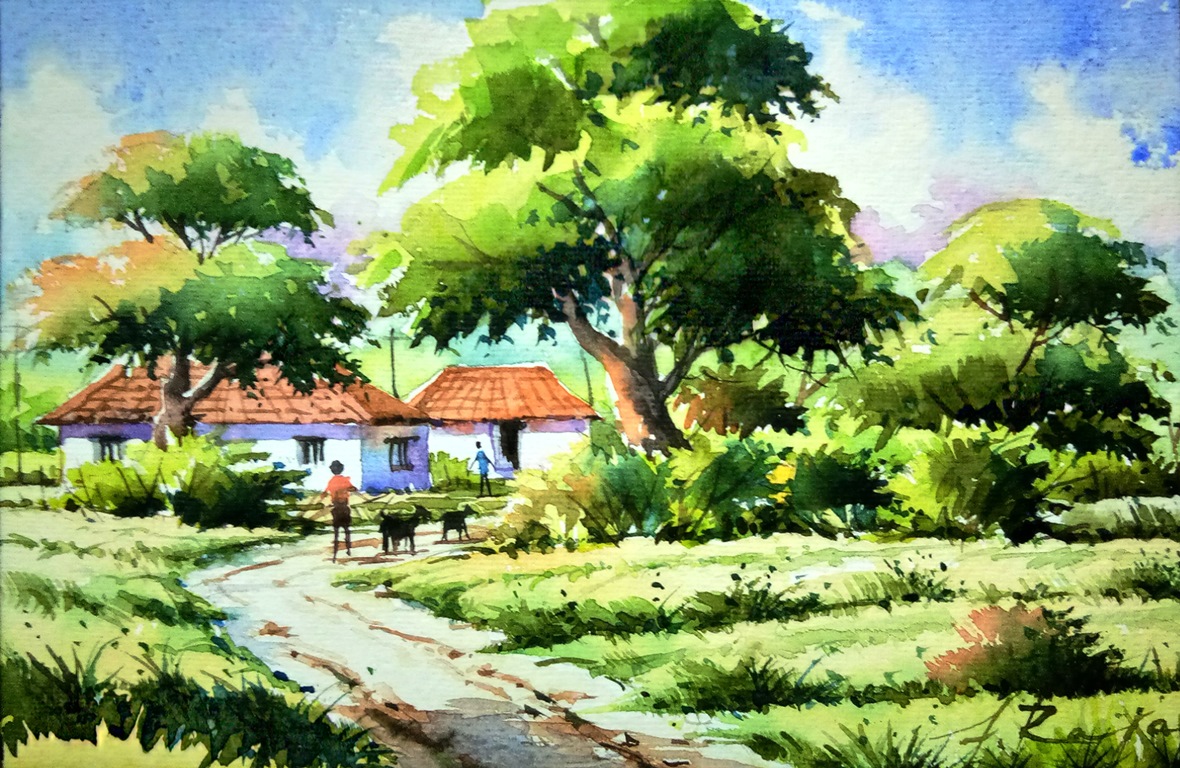
Landscape paintings are arguably one of the oldest forms in the history of painting itself. It was and still is the most readily available subject matter one could find in his or her vicinity. The subject has a wide-view angle and there is the inclusion of natural scenery such as forest, sky, river, mountains etc. In contemporary landscape paintings, both the aspects of western and East Asian (mainly the Chinese) forms has been quite influential. The Chinese landscape has a rich history dating back to circa 4th century and the extraordinary element of this style is its occasional adherence to the metaphysical realm such as spirituality and philosophies.
 Taoism is one such philosophy that one can encounter while going through the historical Chinese landscape paintings. The prominent material used traditionally is ink which when applied with a brush creates quite a vibrant contrast with the background. The Chinese used the term Shan-Shui (mountain-water) to refer to landscape paintings and it was important for the artist to express his emotions and feelings in the art-piece as well. This was a bit contrary to western landscape painting which was influenced by Greco-Roman aesthetics and did not emerge as an independent genre until the beginning of the 15th century. Though it is worth mentioning that western landscape paintings are as old as its Chinese counterpart is but the former does not have an individual genre to its name. Rather than relying on pure imagination, the west excelled in what is called as ‘history painting’ which typically included figurative reference of biblical and mythological nature to emphasize on the narrative aesthetics.
The medieval times, around 14th and 15th century, saw various landscape artists renewing their lost interest in scape painting. After the advent of oil painting during the Renaissance period, there was an unprecedented boom in this field of art pioneered by the likes of Leonardo da Vinci and his contemporaries. The Golden Age of Dutch painting during the 17th century and English specialization of the genre took it to new heights. John Constable, J M W Turner contributed gloriously to the cause, with watercolor and a romantic twist. During the mid-19th century, the world also saw the contributions of the Americans through the Hudson River School.
The next revolution in the field of Landscape paintings came from the portable easel and tube paint, which allowed artists to take their equipment out into the field. This became a major game changer as now the painters are in the liberty to study their subjects up close and personally and this made headway for a prevalence of the concept of outdoor painting during the late 19th century.
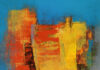
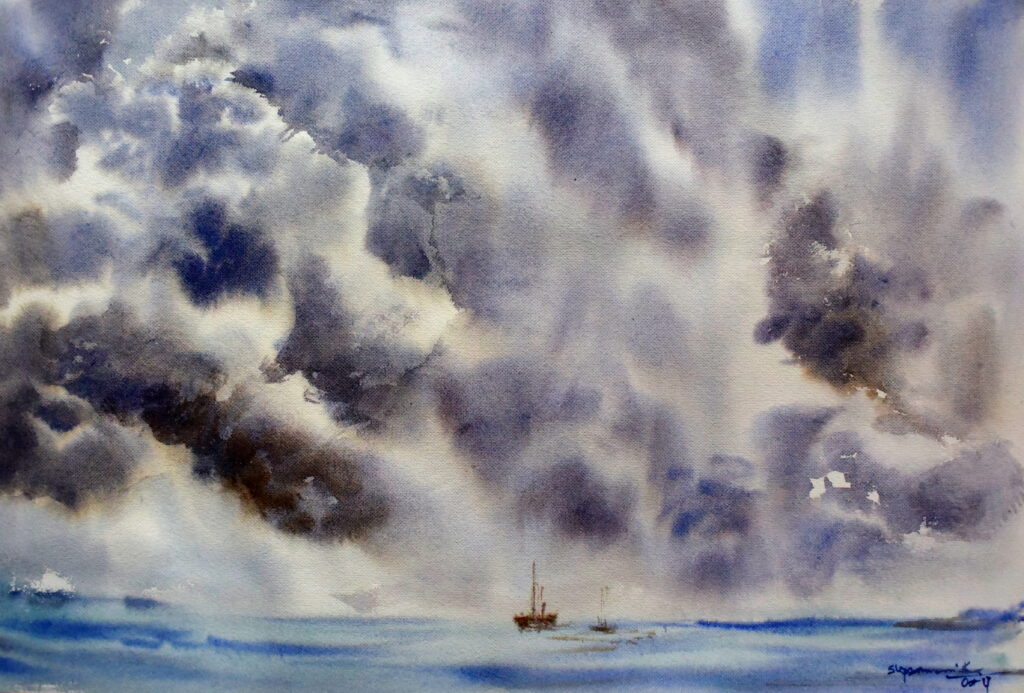 The 20th-century modernism added another foreign component into the composite of landscape paintings. The leniency toward expressionism further linked abstract art with landscape painting. The members of Die-Burke painters group of Germany were the first to attempt this meticulous trial & error process. The result was a confluence of the elements of abstraction such as fauvism, cubism, and surrealism incorporated into the genre of landscape paintings. Salvador Dali’s ‘the persistence of memory’ is a perfect embodiment of such concepts of modernism.
Landscape paintings have seen a tremendous disruption of techniques, material, and concepts throughout their long and affluent history. The evolution of modern landscape painting is a classic tale where east meets west. This bipolar fusion of two independent artistic aesthetics along with the technological inputs such as digital media has shaped the modern day landscape painting. After the wave of postmodernism, a steady increase of urban landscape is seen in this particular niche of paintings. The prominence of cityscapes, alloyed with contemporary abstraction brings about a fresh new addition to the genre. Art enthusiasts these days prefer something that tickles their brain with an inherent complexity rather than a bland natural scenery. Art is the embodiment and expression of life itself. The triumph of life against all odds is a miracle where mutation i.e., change has had been in the forefront. Much like life itself, any form of art demands a change of a certain degree every now and then.
 Similarly, contemporary landscape artists are breaking new barriers to look for that deviation and in their attempt to do so, they have increased the cumulative complexity of this primal genre. This genre stood the test of time with its artists, and their masterpieces standing tall side by side as sentries. Some of the prominent painters of this immortal genre are Ma Yuan, Shen Zhou, Van Gogh, Monet, and Rousseau, Joan Miro who have tinkered and improvised individually and contributed immensely to its diversity.